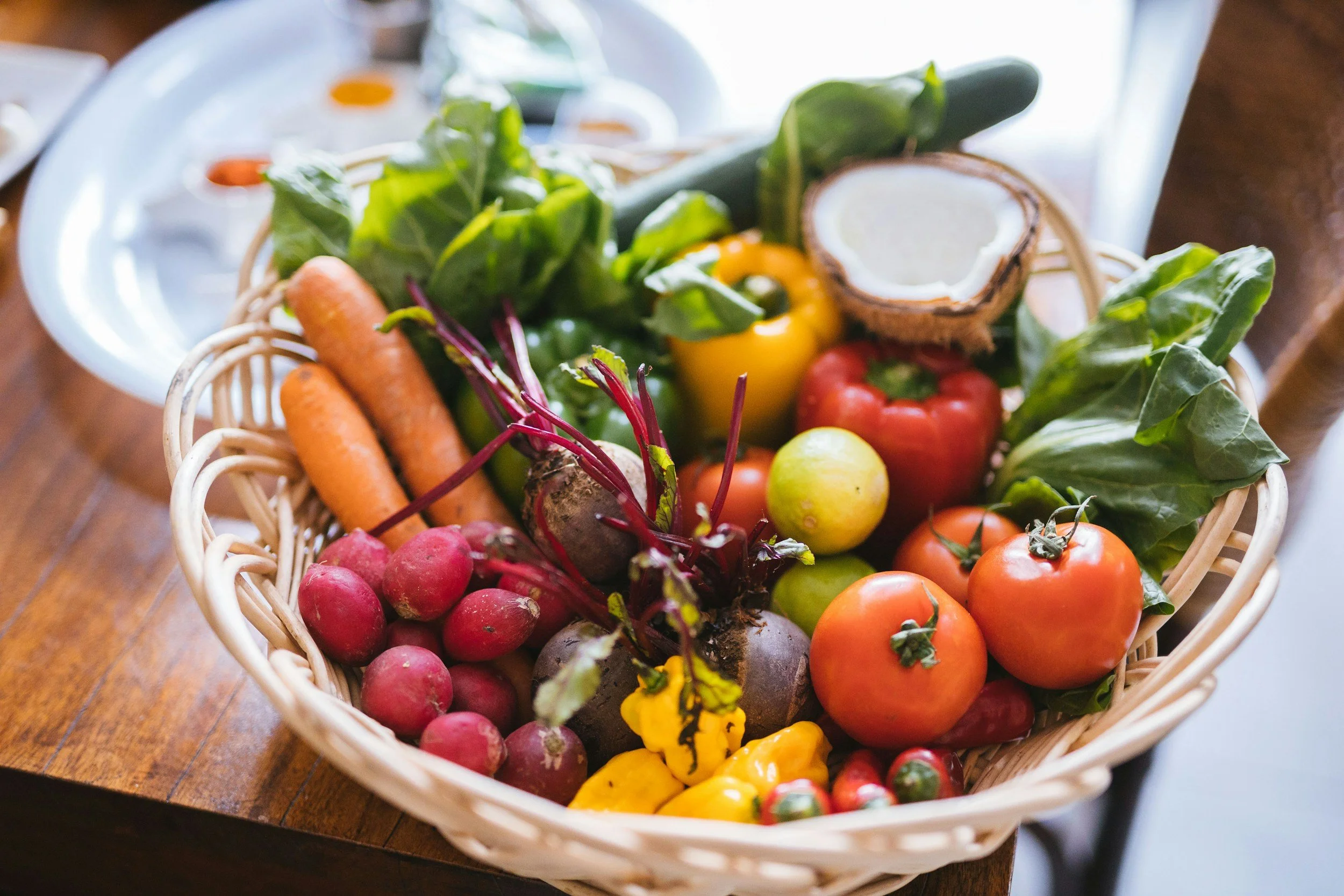
Organic and conventional produce differ in farming methods and price, while nutrition differs only slightly. Organic farming bans synthetic fertilizers and requires three years of clean soil, and conventional farming allows a wider range of EPA-registered pesticides, yet reviews of the nutrition evidence find small, inconsistent gaps between the two. Conventional produce residues almost always stay below EPA tolerances, and rinsing under cool running water, scrubbing firm items, and stripping outer leaves lowers what remains. Organic costs more because hand weeding, compost, lower yields per acre, and certification fees all raise production expenses, and frozen organic berries and spinach shrink the gap. Thin-skinned fruit and leafy greens are the best organic upgrades, and thick-peeled items like avocados, bananas, and citrus are fine conventional.
Organic versus conventional produce differs in farming and price, not nutrition
The two systems differ most in how they're farmed and how they're priced. They differ least in what ends up on your plate nutritionally. Here's the side-by-side before the detail:
Factor | Organic | Conventional |
|---|---|---|
Fertilizer | Compost, manure, cover crops; synthetic fertilizers prohibited | Synthetic fertilizers allowed and widely used |
Pest control | Rotation, beneficial insects, mostly natural-origin pesticides plus a short list of approved synthetics | Broader range of EPA-registered synthetic pesticides |
Pesticide residues | Lower likelihood of detectable synthetic residues; not residue-free | Residues more often detectable, generally below EPA limits |
Nutrition | Small, inconsistent differences in some compounds | Nutritionally very similar |
Price | Usually higher, premium varies by item and season | Usually lower |
Shelf life | Can soften or spoil sooner on some items | Often longer, helped by post-harvest treatments |
Verification | USDA certification and seal | No special label |
Organic and conventional farms are separated by the inputs they may use
Conventionally grown and organic crops can come from farms that look almost identical from the road. The difference is in the toolbox each farmer is allowed to open.
Organic farming bans synthetic inputs and requires three years of clean soil
In the U.S., "organic" is a legal term governed by the USDA's National Organic Program. Certified growers can't use synthetic fertilizers, genetically engineered seeds, sewage sludge, or irradiation, and the land has to be free of prohibited substances for three years before an organic harvest. Soil fertility comes from compost, aged manure, and cover crops like clover that get turned back into the ground. Weeds are handled with mulch, cultivation, and a lot of hands.
Pest control leans on crop rotation, habitat for beneficial insects, and pesticides drawn mostly from natural sources (copper, sulfur, certain bacterial products), plus a narrow set of synthetics on the program's National List. Organic farming still uses pesticides. It uses a different, smaller set of them.
Conventional farms use synthetic inputs and spray only when pests cross thresholds
Conventional growers can use synthetic nitrogen and phosphorus fertilizers, a much wider range of EPA-registered pesticides and herbicides, and genetically engineered varieties where those exist. Many conventional farms also rotate crops and practice integrated pest management, spraying when pest counts cross a threshold rather than on a fixed calendar. That wider toolbox is a large part of why conventional fields tend to produce more food per acre, and why that food usually costs less at the register.
The USDA Organic seal is the most reliable label signal
The round green-and-white USDA Organic seal is the most reliable signal you have. It means a certifying agent has inspected the operation. For packaged foods, the USDA uses three tiers:
"100% organic": every ingredient is certified organic. May carry the seal.
"Organic": at least 95 percent organic ingredients. May carry the seal.
"Made with organic ingredients": at least 70 percent organic ingredients. Cannot carry the seal on the front.
A single head of broccoli is either organic or it isn't, so those tiers matter more for jarred salsa and frozen stir-fry blends than for the produce bins. Words like "natural," "pesticide-free," and "locally grown" carry no organic meaning at all. Many stores also use five-digit stickers starting with 9 on organic items, though the seal or the bin sign is the surer check.
Farmers markets add a wrinkle. Very small farms below a sales threshold can describe their produce as organic without paying for certification, though they can't use the seal, and plenty of uncertified growers farm with organic methods anyway. Ask the person behind the table how they handle pests. A farmer who grows that way usually lights up when asked. For packaged foods, the ingredient list sits right beside these claims, and a few minutes spent on reading a nutrition label line by line makes the organic claim much easier to weigh.
Organic produce shows only small, inconsistent nutrition differences
On nutrition, the evidence points to small, inconsistent differences. Three reviews shape most of the conversation, and they're worth reading together rather than cherry-picking one:
Smith-Spangler et al., 2012 (Annals of Internal Medicine): a Stanford-led review that found little strong evidence organic foods were meaningfully more nutritious, while noting that organic produce was less likely to carry detectable pesticide residues.
Barański et al., 2014 (British Journal of Nutrition): a meta-analysis that reported higher concentrations of certain antioxidants and lower cadmium, a heavy metal, in organic crops.
Vigar et al., 2019 (Nutrients): a systematic review of human health outcomes that found some positive associations with organic eating but flagged that most studies were observational and limited in quality.
That last caveat matters more than any single finding. People who buy organic also tend to cook more, smoke less, and eat more vegetables overall, so it's hard to know whether the organic label or the whole lifestyle deserves credit. The plain-language read: organic may carry modest advantages in some compounds and lower exposure to synthetic residues, and nobody has shown it makes a measurable difference to long-term health on its own.
An organic apple and a conventional apple are far closer to each other than either one is to the snack it could have replaced.
Which leads to the point I care about most. The volume and variety of plants you eat will shape your health far more than the farming method behind them. If a plate that's half vegetables is only affordable when those vegetables are conventional, buy conventional and fill the plate.
Conventional produce residues almost always stay below legal safety limits
Conventional produce is safe to eat
The EPA sets a legal maximum, called a tolerance, for each pesticide on each crop, and those limits are built with safety margins below the levels where effects appear in testing. The USDA's Pesticide Data Program samples thousands of fruits and vegetables each year, and its annual summaries consistently report that the large majority of samples fall below those tolerances.
Organic produce isn't residue-free either. Drift from neighboring fields happens, and organic-approved substances leave their own traces. "Natural" doesn't automatically mean gentler: copper-based sprays, for example, can build up in soil over years of use.
So when does it make sense to worry more?
Pregnancy and early childhood are the strongest cases, since small children eat more food relative to their body weight and are still developing. The other case is sheer volume. Someone who blends a pound of spinach and berries into smoothies every morning has more exposure riding on those choices than someone who eats a handful of berries a week.
Washing helps whichever you buy. The National Pesticide Information Center, run by Oregon State University with the EPA, recommends a simple routine:
Wash your hands, then rinse produce under cool running water, rubbing as you go.
Scrub firm items like potatoes, carrots, and melons with a clean vegetable brush.
Strip the outer leaves from lettuce and cabbage.
Peel when it makes sense, accepting you'll lose some fiber.
Skip soap and bleach; they aren't meant for food and can leave their own residue.
Organic costs more because labor, compost, and certification raise production expenses
Organic usually costs more because it costs more to grow, and the gap isn't arbitrary. Several pressures stack up on the farm side:
Weeding by hand or machine takes far more labor than spraying a herbicide.
Compost and manure are bulkier and pricier to source and spread than synthetic fertilizer.
Yields per acre tend to run lower, so fixed costs spread across fewer crates.
Certification brings annual fees, inspections, and record-keeping.
Organic supply chains are smaller, so distribution costs more per item.
How much more depends heavily on the item, the season, and where you shop. The USDA Economic Research Service tracks organic price premiums and has documented that they persist across many products, so its website is the place to check current figures rather than trusting a number from an old article. In the store, you'll often notice the gap is narrow on bagged carrots and wide on berries.
A few moves shrink that gap in practice. Frozen organic berries and spinach are often far cheaper than fresh, picked ripe and lasting for months. Store-brand organic lines tend to undercut name brands. In-season produce at a farmers market, especially late in the day, can come close to conventional prices. And planning a week's meals around your real cook nights means you buy only what you'll use, which matters more with produce that spoils fast.
Both systems carry real trade-offs worth weighing
Neither option is free of trade-offs, and the downsides of organic get skipped in most of the cheerful coverage.
Organic produce spoils faster and needs more land per harvest
Price comes first, but spoilage runs a close second. Without some of the synthetic coatings and ripening inhibitors used on conventional fruit, organic berries and greens can turn sooner. That pint of organic raspberries going fuzzy and grey on day three in the crisper drawer has cost you twice. Lower yields mean more land is needed to grow the same amount of food, which complicates the environmental story. Availability is patchy in smaller towns, and the selection can be thin in winter.
There's also a cost that doesn't show up on a receipt. Treating conventional produce as contaminated can tip into anxiety about food, and for some people that rigidity becomes its own problem. If organic rules have started to feel like a source of fear, the conversation about avoiding the orthorexia trap is worth sitting with.
Conventional produce carries more detectable residues and runoff pollution
Residues are more often detectable, even when they sit well under legal limits, and some people would rather keep that exposure as low as practical. Synthetic fertilizer runoff contributes to nutrient pollution in rivers and coastal waters. Farmworkers who apply pesticides carry a higher exposure than shoppers ever will. Conventional farms vary widely too: one may spray sparingly under careful pest management while another sprays far more, and the label in the store gives you no way to tell them apart.
Choose organic or conventional item by item, based on peel and eating habits
Choose by item and by situation, not by system. This matrix is how I'd make the call at the shelf:
Situation | Lean toward | Why |
|---|---|---|
Thin-skinned fruit eaten whole (berries, grapes, peaches) | Organic | No peel stands between you and surface residue |
Leafy greens and herbs | Organic | Large surface area, eaten whole, hard to wash thoroughly |
Thick peel or rind (avocado, banana, citrus, pineapple, onion) | Conventional | The part you discard carries most of the residue |
Pregnancy or young children at the table | Organic for staples they eat daily | Higher intake relative to body weight |
Tight budget, any produce | Conventional, or frozen organic | More plants beats fewer, pricier ones |
Something you eat every single day | Organic if affordable | Daily volume adds up |
Produce that sits for a week before use | Conventional or frozen | Longer shelf life means less waste |
Start the switch with thin-skinned fruit and leafy greens you eat most
If you're starting from an all-conventional cart, I'd move these to organic first, in roughly this order: the berries and greens your household eats most, then apples, pears, and stone fruit you eat skin-on, then bell peppers and tomatoes. Swap them in a few at a time and watch what happens to your weekly total. A slow change you can keep up is worth more than a dramatic overhaul you abandon in a month.
Thick-peeled produce is fine conventionally grown
Anything you peel thickly: avocados, bananas, oranges, mangoes, pineapple, melons (scrubbed before cutting), onions, and garlic. Sweet corn in its husk sits comfortably here too. Wash it all, buy plenty, and stop second-guessing it. If you want these sorted into an actual shopping list, the whole-food grocery list on this site groups produce with buying notes you can carry straight into the store.
Families have an extra layer of math, since kids' tastes, school lunches, and weeknight chaos all shape what gets eaten versus what gets thrown out. Building a food routine that survives a busy household often does more for your budget than any organic rule, because the cheapest produce is the produce that gets eaten.
This week, try one small experiment: before you shop, sort your usual list into "skin and all" and "peeled," and move only the first group's top two items to organic. Notice what it costs, what spoils, and how it feels to shop with a plan instead of a vague sense of guilt. If that sorting brings up bigger questions about how you eat, what you can afford, or why food decisions feel so heavy, that's the kind of thing I work through with people in health and wellness coaching, one grocery run at a time.
I’m a brand ambassador with the following companies. Here are the particulars:
Chalkboard Candle Co - https://chalkboardcandleco.com/ - Use code ILENEBETH15 to receive 15% off your order
Own Your Stigma - https://ownyourstigma.com/ - Use code ILENEBETH15 to receive 15% off your order. Additionally, use referral link: https://ownyourstigma.com/?ref=tcwitrnu
Apres Beauty - https://apresbeauty.co/ - Use code ILENEBETH to to receive 20% off your order. Additionally, use referral link https://apresbeauty.co/?ref=upunijjp
Valltees - https://valltees.com?shop_consented_scopes=email%3Averified+openid+pay%3Asession_token+profile+shop%3Aaccount_uuid&shop_sign_in=true - Use code ILENEBETHMILLER to receive 15% off your order. Additionally, use referral link https://valltees.com/?ref=ILENEBETHMILLER
Emmafy - https://emmafy.com/ - Use ILENE44857 to receive 10% off your order https://www.emmafy.com/ILENE44857 to receive your 10% discount
RBF - https://www.rbfmovement.com/ - Use code ILENEBETH to receive 10% off your order. Additionally, use referral link https://www.rbfmovement.com/?ref=ILENEBETH
Disclaimer: I receive compensation for purchases made