A Beginner's Grocery List for Holistic, Whole Food Eating
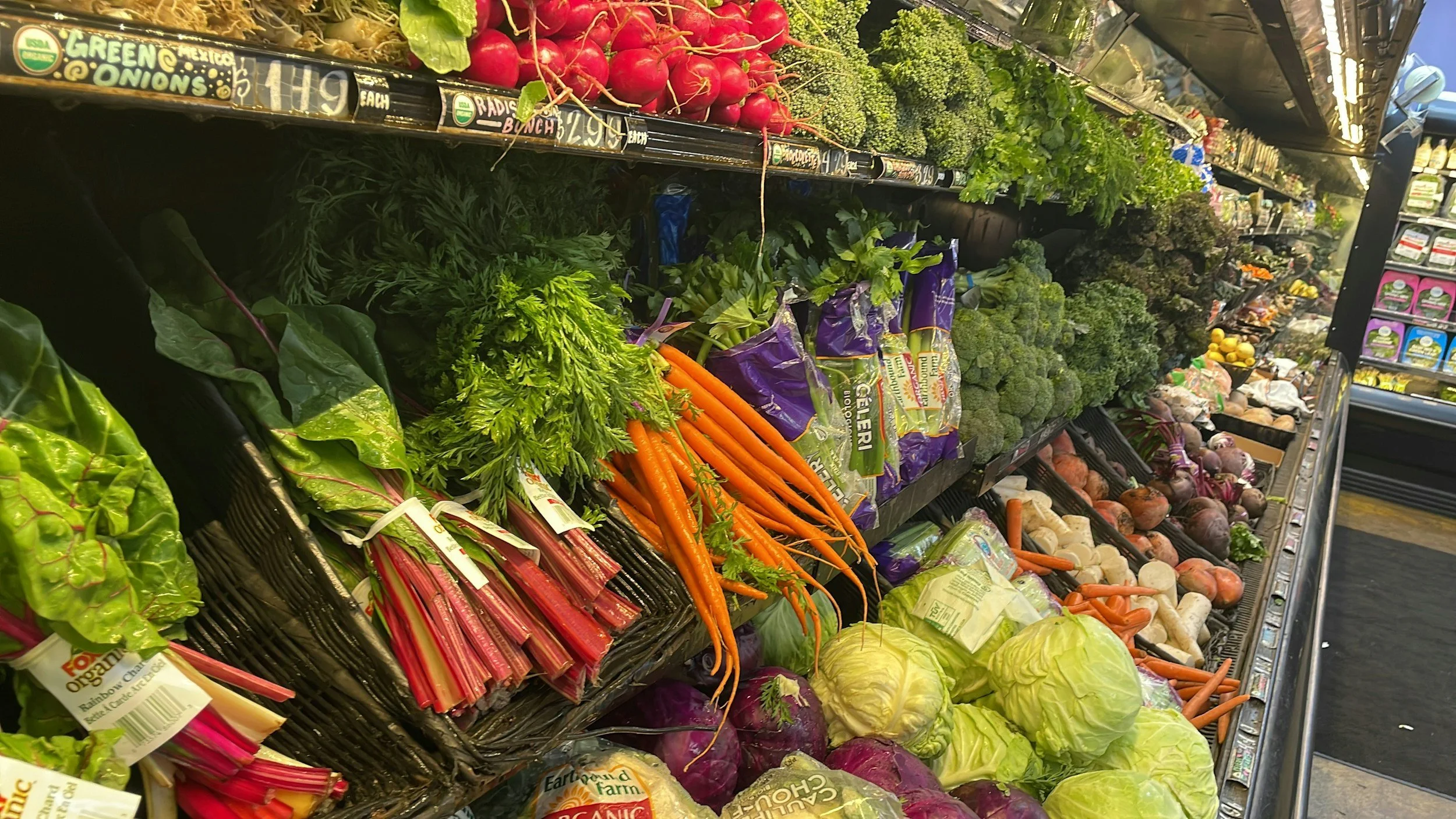
Start your holistic grocery list at the produce wall, not the supplement aisle. That's the single decision that separates a cart full of whole food from a cart full of good intentions with a health halo on the label. Everything below is organized by where you'll physically stand in the store, with a note beside each item explaining what it's doing for you and how to buy it without overthinking.
This is a starter list, not a rulebook. You'll use maybe two-thirds of it in any given week. The goal is a kitchen where the easy choice and the nourishing choice are the same choice, because the ingredients are already washed and within reach.
Plan three dinners, then build a holistic grocery list for their overlap
Write down three dinners. That's it. Three, not seven, because week seven of overplanning is the week you order takeout out of spite. Then look at what those three dinners share: a protein, a cooked vegetable, a starch, something acidic or fermented to wake it up. Buy for that overlap, and buy a little extra of the things that hold.
A holistic approach to food means you're shopping for your whole week, including the tired parts of it. The Tuesday version of you does not want to butterfly a chicken. Give that person a bag of pre-washed greens and a carton of soup and let it go.
- Shop the walls first. Produce, meat and fish, dairy and eggs sit around the outside of most stores. Fill the cart there, then dip into the center aisles for oils, grains, beans, and spices with a specific list.
- Buy one new thing per trip. One. A bunch of dill, a jar of tahini, a bag of black rice. Curiosity is more durable than discipline.
- Check what's already at home. Half of decision fatigue at the store is not remembering whether you have cumin.
Sturdy vegetables survive a bad week in storage
Sturdy vegetables earn their place because they survive a bad week. Carrots, cabbage, beets, sweet potatoes, winter squash, celery root, onions, and garlic will sit in your crisper for two weeks and still roast up sweet and caramelized at the edges. A head of green cabbage will outlast almost anything else you buy, and shredded thin with lemon and olive oil it goes from doorstop to salad in four minutes.
Leafy greens are the opposite: bright, fragile, gone by Thursday. Buy them anyway, and buy two kinds. Something tender for raw eating (arugula, butter lettuce, baby spinach) and something with structure for cooking (lacinato kale with its bumpy dark leaves, Swiss chard with the pink and yellow stems you should chop and sauté rather than throw away). Wash them the day you get home. Wet greens in a cloth-lined container will get eaten.
- Alliums: yellow onions, shallots, a whole head of garlic. The base of nearly every savory thing you'll cook.
- Fresh herbs: parsley, cilantro, dill, mint. A handful of chopped parsley over roasted vegetables changes them completely. Store stems-down in a jar of water on the counter.
- Citrus and lemons especially: acid is what makes home cooking taste finished rather than flat.
- Berries and one seasonal fruit: whatever is in season smells like something when you hold it near your face. In August that's stone fruit and melon; by November it's apples and pears.
- Ginger and fresh turmeric: knobby, gold-fleshed, staining. Grate into dressings, tea, and soups.
- Avocados at two ripeness stages: one for this week, one hard as a rock for next.
On organic: I'd spend the extra money on the thin-skinned things you eat whole, like berries, leafy greens, and apples, and skip it on avocados, onions, and citrus where you're throwing the outside away. If organic pushes the total past what's comfortable, buy conventional produce. More vegetables beats fewer perfect vegetables, every time.
Four proteins total per week beats endless choice
Pick two animal proteins and two plant proteins per week and stop there. Constraint is what makes this sustainable.
Eggs do more work than anything else in this section. Pasture-raised yolks are a deeper orange and they hold together better when you fry them; they're worth the premium if the budget stretches. Beyond eggs, I'd rotate between a whole chicken (roast it Sunday, pull the meat Monday, simmer the carcass into stock Tuesday), a fatty fish like salmon or sardines for omega-3s, and ground turkey or beef for the nights that need to be fast.
Canned and jarred fish deserve more respect than they get. Sardines packed in olive oil, mashed onto toast with lemon and a lot of black pepper, is a five-minute meal with real nutritional weight behind it. Tinned salmon works the same way.
- Dried or canned beans: chickpeas, black beans, cannellini, lentils. Red lentils cook in fifteen minutes and collapse into a soft, golden soup base without any soaking.
- Nuts and seeds: almonds, walnuts, pumpkin seeds, hemp hearts, ground flax. Buy them in smaller quantities and keep them cold. Rancid nuts taste like crayons and you'll notice immediately.
- Plain Greek yogurt or kefir: full fat, unsweetened, tangy enough to make you blink. Sweeten it yourself with fruit if you want it sweet.
- Tofu or tempeh: tempeh has more chew and a nutty, slightly funky edge from the fermentation. Press tofu between towels before you cook it.
Pantry staples change whatever produce you have left
The pantry is where a holistic grocery list stops being a shopping trip and starts being a system. These are one-time purchases you'll restock every few months, and they do the work of turning whatever produce is in your fridge into an actual dinner.
| Item | What it does | Buying note |
|---|---|---|
| Extra-virgin olive oil | Everyday cooking and dressings | Dark bottle, harvest date on the label if you can find one |
| Raw apple cider vinegar | Dressings, quick pickles, brightening soups | Cloudy is fine, that's the point |
| Tahini | Sauce base for grain bowls and vegetables | Should pour, not clump; stir it in hard when you open it |
| Whole grains | Bulk, fiber, leftovers that reheat | Rolled oats, quinoa, brown or black rice, farro |
| Sea salt and whole peppercorns | The only two seasonings you truly can't skip | Flaky salt for finishing, coarse for cooking |
| Miso paste | Deep savory flavor without meat | Keeps in the fridge for months; white is mildest |
Add a spice rotation you'll reach for: cumin, smoked paprika, coriander, cinnamon, red pepper flakes, and a bay leaf or two. Buy whole cumin seeds once and toast them in a dry pan until they smell like a bakery and a campfire at the same time. You won't go back to the pre-ground jar.
Keep low-sodium broth, canned tomatoes, and coconut milk on the shelf as well. Those three plus an onion and whatever vegetable is dying in your crisper is a soup, and soup is the most forgiving thing you can cook when your capacity is low. If the way chronic stress reshapes appetite and blood sugar is part of what brought you to this list, having a pot of something warm and salted ready in the fridge matters more than any single ingredient on it.
Raw fermented foods add crunch and live cultures
These go in a separate section because they're easy to forget and they punch above their weight. A spoonful of sauerkraut beside dinner takes zero preparation and adds a sharp, sour crunch that cuts through anything rich.
Raw sauerkraut or kimchi: refrigerated section, not the shelf-stable jar. If it isn't cold, the live cultures aren't there.
Kefir or plain yogurt with live cultures: check the label for named strains rather than a vague "probiotic" claim on the front.
Miso: whisk into warm (not boiling) water or broth at the end of cooking.
Ground flaxseed and chia: soluble fiber that feeds the bacteria you're trying to support.
If this is the direction you want to go deeper in, the foods worth introducing first for gut support get into starting portions and a three-week ramp, which matters, because dumping four fermented foods into a system that isn't used to them is a rough Tuesday.
Frozen produce often beats sad out-of-season fresh
The freezer is not a compromise. Frozen produce is picked ripe and frozen fast, and for things like peas, spinach, corn, and berries it often has more going for it than the sad out-of-season version in the produce aisle. Stock frozen wild blueberries, spinach, peas, edamame, and a bag of frozen fish fillets.
Also worth keeping: a jar of good olives, a tin of chickpeas, and one decent frozen meal you don't feel bad about. That last one is a nutrition strategy, not a failure of one. Having a fallback removes the panic that leads to a week of drive-through.
Skip heavily marketed foods with ingredient lists you don't recognize
Skip anything marketed at you harder than it's fed to you. Protein bars with fourteen ingredients, "natural" fruit snacks, vegetable chips, sweetened plant milks, granola with more sugar than a cookie. None of these are moral failures. They're just expensive ways to buy something you could make better with three ingredients.
Read the ingredient list rather than the front of the box. If cane sugar, syrup, or a maltodextrin shows up in the first three ingredients of something you thought was savory, put it back. That one habit will reshape your cart more than any list I could write.
The best holistic grocery list is the one that matches how you cook, not how you wish you cooked.
Thirty minutes of prep makes assembly the only work left
Give yourself thirty minutes when you get home. Wash and dry the greens, chop the carrots and celery into sticks, hard-boil six eggs, cook a pot of grains, and make one jar of dressing (olive oil, vinegar, mustard, salt, shake it hard). Now the fridge is a place where dinner is mostly already made and you're just assembling it.
Then pay attention to what you keep throwing away. If the kale rots every week, stop buying kale. That's not a discipline problem, it's data about your real life, and adjusting the list to match it is the whole practice. The same attentiveness applies to hunger itself; learning to tell physical hunger from an emotional pull toward food will change what you buy more than any nutrient breakdown will.
Some weeks the list won't hold. A hard stretch at work, a sick kid, a stretch of grief that settles into the body as fatigue and appetite changes, and suddenly cooking feels like climbing. On those weeks, buy the rotisserie chicken and the bagged salad and call it nourishment, because it is.
A list stops working when timing or portions are the real problem
A list can only carry you so far. If you're eating well on paper and still waking at 3 a.m., or your energy craters every afternoon regardless of what's in the fridge, the answer isn't a longer list. It's a closer look at timing, portions, and what your particular body is asking for, which is the territory wellness coaching covers and where a generic list runs out of road.
Meal timing in particular tends to get overlooked. What you eat at 9 p.m. shapes how you sleep more than most people expect, and there's a real relationship between evening meals and the quality of rest that no grocery list on its own can address.
If you want help translating a holistic grocery list into a pattern that fits your schedule, your budget, and whatever season of life you're in right now, that's exactly the kind of work holistic nutrition and wellness coaching is for. Start with the produce wall this week. See what you eat, what you throw out, and bring that information with you.