How to Build a Balanced Plate the Holistic Way
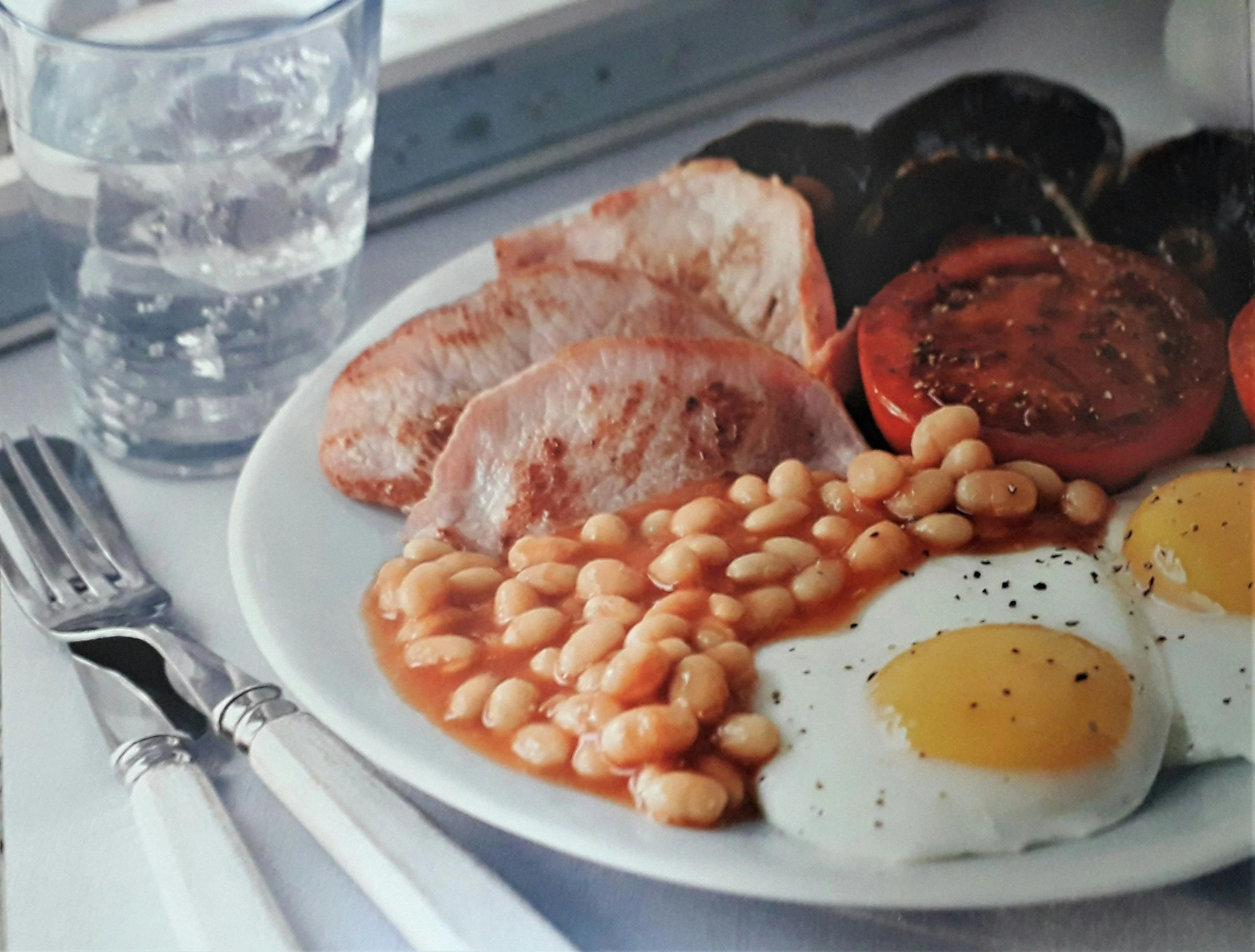
A holistic balanced plate starts with a nine-inch surface, filled half with vegetables, a quarter with protein, and a quarter with grains or starch, plus a thumb of fat. Harvard and other major health systems converge on this same ratio despite using different vocabulary to describe it. Protein slows gastric emptying, which keeps a person level until the next meal, while whole grains retain bran and fiber so glucose arrives in a slow wave instead of a spike. Fat is not optional: fat-soluble vitamins in vegetables require it for absorption, and one tablespoon of olive oil or a quarter avocado does the job. Eating conditions shape the outcome as much as the food itself, since pace, meal spacing, hydration, and stress all affect digestion and whether the plate's proportions truly register as satisfying.
Pull a standard dinner plate out of your cabinet and measure it. If it's larger than a standard dinner plate from a few decades ago, your sense of a normal portion has already been reshaped bit by bit by dishware design. That's where a holistic balanced plate starts: not with a food list, but with the surface you're filling. Fill a nine-inch plate half with vegetables, a quarter with protein, a quarter with a starch or grain, add a thumb of fat, and you've done most of the work without weighing a single thing.
What makes the approach holistic rather than mechanical is everything the ratio leaves out. Temperature. Chew. Whether you're eating standing at the counter with your coat still on. The plate ratio is the skeleton; the rest of this walks through how to build it, how to bend it around real life, and why the proportions do what they do inside your body.
Building a Holistic Balanced Plate: Half Vegetables and Fruits, Quarter Whole Grains, Quarter Protein
The percentage split is the one piece nearly every major health organization agrees on, which is reassuring when so much nutrition advice contradicts itself. Harvard's model is widely described as roughly half vegetables and fruits, with the remaining split between whole grains and protein. Other major health systems describe a nearly identical split: half vegetables and fruits, a quarter lean protein, a quarter whole grains and starches. A third common framing: 50% non-starchy vegetables, 25% lean protein, 25% carbohydrates, with small portions of healthy fats added on.
Three organizations, three slightly different vocabularies, one ratio. Memorize it once and you can stop reading nutrition articles for a while.
A quick note on the fruit question, because it trips people up. Fruit lives in the vegetable half on paper, but fruit and broccoli don't behave the same way in your bloodstream. I'd keep fruit to a small corner of that half at dinner and let it take a bigger share at breakfast, when the sugar has a whole day to get used.
| Plate section | Share | What goes there | Rough hand measure |
|---|---|---|---|
| Non-starchy vegetables (and some fruit) | 50% | Leafy greens, broccoli, peppers, zucchini, cabbage, tomatoes, berries | Two cupped hands, loosely filled |
| Protein | 25% | Fish, poultry, eggs, beans, lentils, tofu, tempeh, Greek yogurt | One palm, thickness included |
| Grains and starches | 25% | Brown rice, farro, quinoa, oats, sweet potato, winter squash, beans (again) | One cupped hand |
| Fats | Small but deliberate | Olive oil, avocado, almonds, walnuts, tahini, pumpkin seeds | One thumb |
Hand measures travel better than cups. Your palm is always with you, it scales to your body size automatically, and nobody at a restaurant table notices you doing it.
Non-starchy vegetables must fill the plate first
Load the vegetables onto the plate before anything else. If you plate the chicken first, the vegetables become a garnish by default, and the geometry never recovers.
"Non-starchy" is the only real filter here. Broccoli, cauliflower, cabbage, green beans, peppers, mushrooms, eggplant, asparagus, every leafy green, cucumbers, tomatoes, onions, fennel. Corn, peas, potatoes, and winter squash are wonderful foods that belong in the starch quarter instead, where their carbohydrate load gets counted accurately.
Texture is what keeps this half from feeling like penance. A pile of steamed zucchini is wet and sad. Roast the same zucchini at 425°F until the edges go brown and slightly chewy, scatter flaky salt and lemon zest across the top while it's still hot enough to steam, and it becomes the part of the meal you reach for first. Raw crunch next to something soft, a sour note next to something sweet, a little char somewhere. That contrast does more for compliance than any amount of willpower.
Roast in batches. Two sheet pans on Sunday covers Monday through Wednesday.
Keep a crunchy raw option in the fridge. Sliced cucumber, shredded cabbage, carrot sticks in a jar of water.
Buy frozen without apology. Frozen spinach, broccoli, and green beans are picked at peak and lose almost nothing in the freezer.
Use acid generously. Lemon, lime, apple cider vinegar, a splash of rice vinegar. Acid makes vegetables taste finished.
If your fridge is the obstacle rather than your intentions, a shopping pass built around produce, proteins, and pantry staples solves more than a recipe does. The whole-food grocery list I'd start people with maps closely onto this plate, section by section.
Protein shortfall happens most at breakfast and lunch
Protein is the section people most often undershoot, especially at breakfast. A palm-sized portion at every meal is the target, and "lean" means something specific: fish, skinless poultry, eggs, beans and lentils, tofu and tempeh, plain Greek yogurt, cottage cheese, shellfish. Red meat is fine in a holistic framework; it just doesn't need to be the default three nights a week.
Here's the part that matters more than the source: protein slows gastric emptying. It takes longer to leave your stomach than a carbohydrate does, which is why a plate with a real protein portion keeps you level until the next meal and a bagel does not. Satiety isn't willpower. It's physiology, and you can load the plate to produce it.
Beans occupy a legitimate double role. A cup of black beans delivers protein and starch at once, which means on a vegetarian plate they can legitimately claim ground in both quarters. Don't double-count them and then wonder why you're hungry at four o'clock. If beans are your protein, add a second plant protein somewhere, or accept a slightly larger portion.
Whole grains prevent blood sugar spikes that stripped carbs cause
Carbohydrates are not the problem. Stripped, fast-digesting carbohydrates eaten alone are the problem, and those are two different sentences.
Whole grains still carry their bran and germ, which means fiber, which means the glucose arrives in a slow wave instead of a spike. Brown rice, farro, barley, quinoa, steel-cut oats, buckwheat, whole-grain sourdough. Sweet potato and winter squash count here too. So does regular potato, cooled and reheated, which develops resistant starch that your gut bacteria will thank you for.
One cupped hand. That's the portion, and it looks smaller on the plate than most of us are used to. The vegetables are what make the plate look full, which is the entire design intention.
The ratio isn't about restriction. It's a sequencing tool: fiber and protein arrive first, the starch arrives alongside them, and your blood sugar rises like a hill instead of a wall.
Fat absorption of vitamins requires roughly a tablespoon, or a thumb-sized portion, per meal
Most plate models mention healthy fats in a footnote and move on. That's a mistake, because fat is what makes the fat-soluble vitamins in your vegetable half truly absorbable. Eat a naked salad with no oil and a meaningful share of the vitamin A, D, E, and K in it goes unabsorbed.
Give fat a thumb. One tablespoon of olive oil over the roasted vegetables, or a quarter of an avocado, or a small handful of walnuts, or a spoonful of tahini thinned with lemon into a dressing. Extra virgin olive oil, cold-pressed, in a dark bottle. That peppery catch at the back of your throat is commonly linked to polyphenol content, which tends to diminish as oil ages, so that burn is a freshness test you can taste for yourself.
Fat also does something less measurable. It coats the palate, carries aroma, and signals completion in a way that a low-fat meal doesn't. A plate assembled with no fat is technically balanced and emotionally unfinished, and you'll be in the pantry at 9pm looking for the thing that finishes it.
Eating conditions matter as much as the food itself
A holistic balanced plate accounts for the conditions around the food, not just the food. Four things to layer on once the ratio is habitual.
Fullness signals can take some time to reach your brain, often cited as about twenty minutes
Your stomach's fullness signals take time to register. Eating a correctly proportioned plate in six minutes while scrolling produces a different outcome than eating the same plate in twenty with the phone face down. Put the fork down between bites. Notice when the food stops tasting as vivid as the first bite did, because that shift is usually your body telling you it has what it needs. Learning to read those earlier signals is its own skill, and the body-scan approach to hunger versus craving is where I'd send anyone who finds the plate full but the appetite still loud.
Three to four hour meal spacing prevents ravenous dinner arrival
Three to four hours between meals suits most people. Longer gaps tend to produce a ravenous arrival at dinner, which wrecks the ratio before you've plated anything. Evening timing matters separately: a heavy plate eaten close to bed competes with your body's attempt to wind down, and how evening meals shape sleep quality is worth understanding if you wake at 3am regularly.
Mild dehydration masks itself as hunger and afternoon fatigue
Water belongs beside the plate, not as an afterthought. Harvard's model names it explicitly, recommending water, tea, or coffee over sugary drinks. Mild dehydration also masquerades as hunger and as the mid-afternoon fog you've been blaming on your workload, which is covered more fully in the piece on what dehydration does to mood and focus.
Sympathetic nervous activation diverts blood from digestion
Eating while your nervous system is running hot diverts blood flow away from digestion. The plate can be perfect and still sit heavily if you ate it between two difficult calls. A few slow breaths before the first bite isn't a wellness flourish; it's a way of nudging your body from sympathetic to parasympathetic. Chronic stress also changes how your body handles the glucose from that starch quarter, a loop worth reading about in the breakdown of how stress rewires the way you use food.
Plant proteins blur the protein and starch quarters together
The ratio survives translation into almost any cuisine or dietary pattern. It isn't a diet plan, and it was never meant to be one. What follows is how the proportions bend without breaking.
Vegan or vegetarian: Lean on lentils, chickpeas, tofu, tempeh, and hemp seeds. Because plant proteins often arrive with carbohydrates attached, the protein and starch quarters blur. Aim for a generous palm of concentrated plant protein and accept the overlap.
Lower-carb or diabetic-friendly: Shrink the starch quarter toward an eighth and give the space to vegetables and fat. Keep some starch rather than eliminating it; fiber-rich carbohydrates eaten alongside protein behave very differently than the same food eaten alone.
Soul food, Caribbean, South Asian, Mexican: The ratio doesn't ask you to abandon the food you grew up with. Collards, okra, callaloo, and sautéed greens are the vegetable half. Beans, stewed chicken, fish, and dal are the protein. Rice, cornbread, roti, and plantain are the starch quarter, portioned to a cupped hand instead of the bottom layer of the plate. Same flavors, different geometry.
Bowls and one-pot meals: When everything is mixed, assemble in sequence instead. Greens into the bowl first, then protein, then starch, then the fat as dressing. Build the proportions on the way in.
Breakfast: The hardest meal to balance because of cultural habit. Two eggs, a handful of spinach wilted in the pan, half an avocado, and a slice of whole-grain toast hits every section in under eight minutes.
Eating out: Order a vegetable side in addition to whatever the plate arrives with, and treat the starch that comes with the entrée as your full quarter. Restaurants portion starch and protein generously and vegetables stingily; you're correcting a known bias.
Packed lunches follow the same logic in a container with compartments, or in a jar where the dressing sits at the bottom and the greens ride on top. Family meals with a picky eater work best served family-style, with the components in separate bowls on the table so everyone assembles their own plate. The child who only takes rice and chicken today is still watching you build the other half.
Default dinner patterns migrate to other meals naturally
You're not aiming for a perfect plate at every meal. You're aiming for a default that you fall back on when you're tired, which is precisely when nutrition decisions get made badly.
Pick one meal, probably dinner, and build it this way for two weeks. Don't touch the other meals. Once the proportions feel automatic at dinner, they tend to migrate on their own, because the plate starts looking wrong when half of it isn't vegetables. Batch-cooking a protein and two trays of roasted vegetables on one afternoon makes the whole week's assembly take about four minutes a meal, which is the practical spine of meal planning that doesn't require tracking every ingredient.
If the plate keeps collapsing at the same point every week, the obstacle usually isn't nutritional knowledge. It's a schedule, a stress load, or a household dynamic that no food framework can fix on its own. That's the territory where holistic nutrition and wellness coaching does its real work, and the gentler on-ramp into holistic eating is a reasonable place to start if building a holistic balanced plate feels like too much at once.
Tonight, before you cook anything, go measure your dinner plate. Then build one holistic balanced plate on it, half vegetables, and notice what the proportions feel like in your body two hours later. That's the only data that matters, and it's yours to collect.