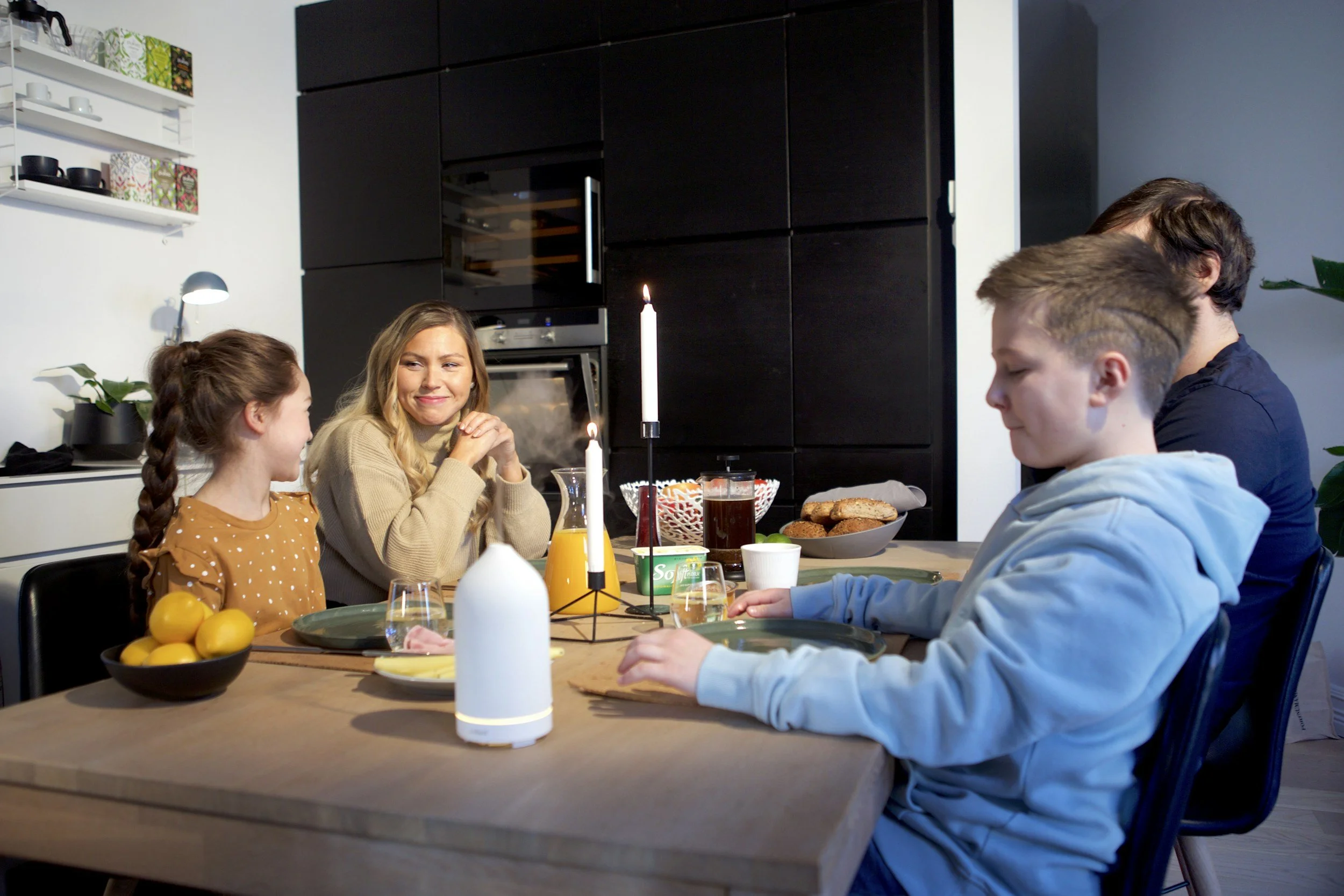
A busy household's dinner routine rests on a few moves: count the real cook nights, cook one base each week that every person can customize, and spend one hour on Sunday so three weeknights run themselves. The base can be bowls, tacos or wraps, or soup and bread, with the half-vegetable, quarter-protein, quarter-starch plate giving kids a visual target without any calorie talk. The Sunday hour covers grains, two sheet pans of vegetables, one batch protein, cut snack produce, and one sauce, and a pantry stocked with cans, grains, frozen vegetables, and nut butters turns a scatter night into a ten-minute dinner. Children who rinse, tear, or stir are more willing to taste what they touched, and Ellyn Satter's division of responsibility gives the parent what, when, and where while the child decides whether and how much to eat.
Before you book nutrition consulting for busy families or buy a single glass meal-prep container, spend seven nights writing down what dinner looked like in your house. Record what landed on the table rather than what you planned: who ate it, what time, and how everyone felt by 7:30.
A Week's Log Reveals Where Meals Really Fail
That seven-night log is the raw material for every step after this one. A notes app works. A sticky note on the fridge works better, because everyone walks past it and someone will inevitably add "pizza again??" in crayon. Track four things:
Cook nights: evenings when an adult had a half hour or more and the energy to use it.
Scatter nights: soccer practice, late meetings, custody handoffs, anything that splits the household across the map.
The crash window: the hour when kids turn snappy and adults start eating crackers over the sink.
Repeat hits: meals that got eaten without a single negotiation.
Expect your real cook-night count to come in lower than you guessed. Two or three is a workable number, and a routine designed around two realistic nights holds up far better than one designed around a fantasy seven. That idea sits at the center of counting your real cook nights before you plan a single meal, and it's where every sustainable family food system starts.
One Cooked Base Lets Each Person Build Their Plate
The single most useful structural change for a mixed household is cooking one base and setting out components, so each person assembles their own plate. It handles the seven-year-old who eats only beige food, the parent avoiding gluten, and the teenager who comes home from practice hungry enough to eat the counter, all from the same pots.
Picture a Tuesday: a pot of brown rice ticking as it steams, a sheet pan of chickpeas and sweet potato crackling in a hot oven, a bowl of shredded chicken, and a row of small dishes with cucumber, avocado, shredded cabbage, and a jar of lemon-tahini dressing. Nobody gets a special-order meal. Everybody gets a choice.
Three bases cover most weeks:
Bowl night: a grain or potato, a protein, two raw vegetables, one roasted vegetable, one sauce.
Taco or wrap night: warm tortillas or lettuce cups, a seasoned bean or meat filling, toppings in separate dishes.
Soup-and-bread night: one big pot on the stove, crusty bread, a bowl of cut fruit for anyone who refuses the soup.
For the rough shape of each plate, the half-vegetable, quarter-protein, quarter-starch balanced plate gives kids a visual target without any calorie talk. I'd rather a child build a lopsided plate they chose than push a perfect one around with a fork.
A One-Hour Sunday Session Frees Up Three Weeknights
One focused hour on the weekend buys back the crash window on three weeknights. Keep it to an hour so it never becomes a second job. A sample run:
Minutes 0 to 10: start a pot of grains and get two sheet pans of vegetables into the oven.
Minutes 10 to 25: cook one batch protein, such as a tray of chicken thighs, a pot of lentils, or hard-boiled eggs.
Minutes 25 to 40: wash and cut snack produce into clear containers you can see from the fridge door.
Minutes 40 to 55: whisk one sauce that makes plain food taste like a meal.
Minutes 55 to 60: write the three cook-night bases on the fridge note.
The kitchen will smell of roasted garlic and toasted cumin for the rest of the afternoon, which is a small reward on its own. Then check your pantry against a short list of staples, the cans, grains, frozen vegetables, and nut butters that turn a scatter night into a ten-minute dinner. A whole-food grocery list with buying notes makes that check fast, and once the shelves are set you'll restock rather than reinvent.
Kids Who Help Prepare Meals Eat More of Them
Mealtime stress drops when food becomes something the family does together instead of something a parent performs for an audience. Children who rinse the berries, tear the lettuce, or stir the sauce are more willing to taste what they touched, and a cranky five o'clock becomes a few minutes of side-by-side work.
Dietitian Ellyn Satter's division of responsibility in feeding is a useful frame here: the parent decides what, when, and where food is served, and the child decides whether to eat and how much. It lowers the pressure on everyone. You stop bargaining over three more bites, and the child stops treating broccoli as a contest.
Match the job to the age. Toddlers can carry napkins. Grade-schoolers can measure rice and set out the topping bowls. Teens can own a full cook night once a week, and adolescence carries its own set of appetite swings and growth demands, which holistic nutrition for teens covers in more depth, picky phases included.
Nutrition Consulting for Busy Families Pays Off When Routines Keep Collapsing
Steps one through four will steady a lot of households. Outside help earns its cost when the routine keeps collapsing for reasons a better shopping list can't fix. Signs you're there:
A child has a diagnosed condition, a food allergy, or growth concerns from the pediatrician.
Adults in the house have conflicting medical needs, such as blood sugar management alongside a heart-healthy diet.
Every dinner turns into a standoff, and the tension is spilling into the rest of the evening.
You know what to do and still can't make it happen, because work stress and exhaustion keep winning.
That last one deserves attention. Sometimes the obstacle is less about food knowledge and more about a schedule and a nervous system stretched thin, which is why coaching for working parents often ends up touching dinner even when nobody asked about it. Picking the right kind of practitioner matters more than picking the first one with an opening:
Provider | What the title means | Best fit | Insurance likelihood |
|---|---|---|---|
Registered dietitian (RD/RDN) | Protected credential requiring an accredited degree, supervised practice hours, a national exam, and continuing education | Diagnosed conditions, allergies, medical nutrition therapy | Most likely, usually tied to a diagnosis |
Nutritionist | Varies by state; some are highly credentialed, others hold no formal license | General guidance, depending on training | Uncommon |
Holistic nutrition or health coach | Training varies widely; a national board certification exists for health and wellness coaches | Habits, routines, stress, follow-through, whole-family behavior change | Rare, though HSA/FSA use is sometimes possible |
My position: if there's a medical diagnosis in the picture, start with a registered dietitian. If the problem is that a healthy plan keeps dissolving by Wednesday, a coach who works on habits, stress, and family dynamics is usually the better match. Some families benefit from both, with the dietitian setting the clinical guardrails and the coach helping the household live inside them.
Pricing and Fit Are Clear Before the First Booking
None of the provider pages that dominate this search give clear pricing, and that silence makes parents hesitate longer than they need to. Here's how the structure tends to work, so you can ask sharper questions on the first call.
Most Practitioners Charge Per Visit or by Package
Most practitioners price in one of three ways: a single initial consultation (often longer and priced higher than follow-ups), per-session follow-ups, or a package covering a set number of weeks with messaging support between sessions. Packages cost more upfront and usually less per session. Prices vary with credentials, location, and whether the work is virtual, so ask every provider for their current rates in writing.
On coverage, insurance is most likely to pay when a registered dietitian provides medical nutrition therapy for a diagnosed condition; Medicare Part B, for instance, covers it for diabetes and kidney disease. HSA and FSA funds can sometimes cover nutrition services treating a specific medical condition, occasionally with a letter of medical necessity from your doctor. Call your plan administrator before the first session rather than after, since rules differ from plan to plan.
Screen Credentials, Telehealth, Timing, and Family Scope
Credentials stated plainly: you should know within a minute whether you're talking to an RD, a nutritionist, or a coach.
Telehealth: a video session from the car in the school pickup line beats a cross-town drive.
Evening or early-morning slots: if every opening sits at 2 p.m. on weekdays, it won't last.
A family-systems approach: they should ask about everyone in the house, not only the person with the symptom.
Reviews that describe process: look for comments about what changed at home, rather than vague five-star praise.
Most Families See One Change in Week One
A good first session runs closer to an interview than a lecture: your schedule, your seven-night log, health history, what each family member will and won't eat, and where the evenings tend to fall apart. Week one usually brings a single change, often a protected anchor dinner or a fixed snack time. Weeks two and three add the Sunday hour and adjust the bases based on what got eaten. By week four you should have a routine that survives a bad week without anyone starting over, plus a clear sense of whether ongoing support is worth continuing.
That pacing is how I approach health and wellness coaching with families: nutrition, stress, and the emotional weather around the table, handled as one connected thing rather than three separate problems.
If your fridge note already shows two cook nights and a crash window that eats every evening, start the seven-night log tonight and bring it to a first conversation. You may find the routine settles on its own once dinner has a shape. Or you may find something underneath it that needs a little more room to talk through.
I’m a brand ambassador with the following companies. Here are the particulars:
Chalkboard Candle Co - https://chalkboardcandleco.com/ - Use code ILENEBETH15 to receive your 15% discount
Own Your Stigma - https://ownyourstigma.com/ - Use code ILENEBETH15 I receive credit. Additionally, use referral link https://ownyourstigma.com/?ref=tcwitrnu for me to receive a 5% commission. Additionally, use referral link https://ownyourstigma.com/?ref=tcwitrnu for me to receive a 5% commission
Apres Beauty - https://apresbeauty.co/ - Use code ILENEBETH I receive credit. Additionally, use referral link https://apresbeauty.co/?ref=upunijjp for me to receive a 10% commission
Valltees - https://valltees.com?shop_consented_scopes=email%3Averified+openid+pay%3Asession_token+profile+shop%3Aaccount_uuid&shop_sign_in=true - Use code ILENEBETHMILLER I receive credit. Additionally, use referral link https://valltees.com/?ref=ILENEBETHMILLER for me to receive a 15% commission. get credit. Additionally, use referral link https://valltees.com/?ref=ILENEBETHMILLER for me to receive a 15% commission
Emmafy - https://emmafy.com/ - Use code ILENE44857 use affilate link https://www.emmafy.com/ILENE44857 when ordering
RBF - https://www.rbfmovement.com/ - Use code ILENEBETH I receive credit. Additionally, use referral link https://www.rbfmovement.com/?ref=ILENEBETH for me to receive a 10% commission
Disclaimer: I receive compensation for purchases made