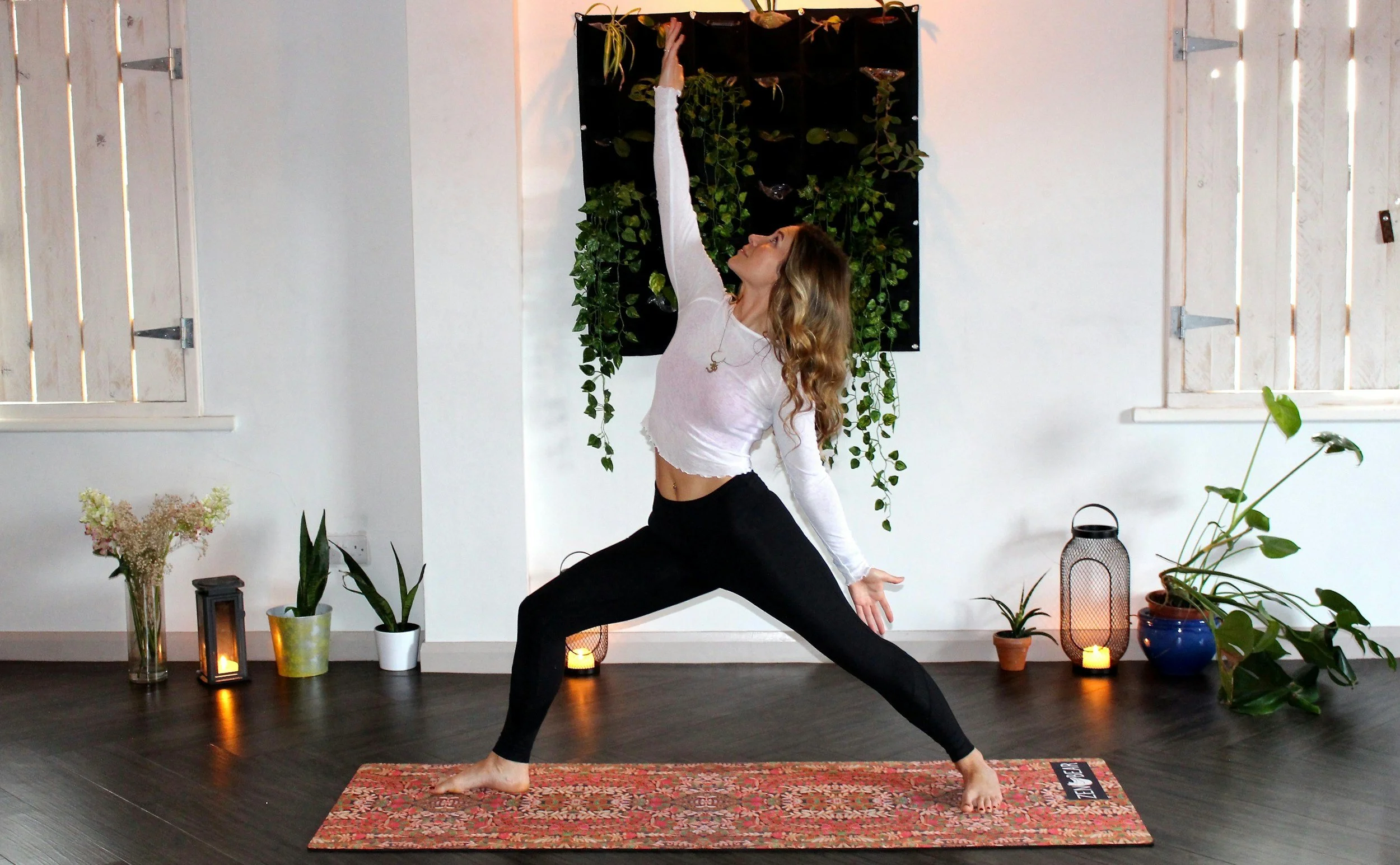
A ten-minute outdoor walk, with breath matched to steps (in for four, out for six), takes the heat out of restless stress, and a two-minute shake-out with a final 30 seconds of stillness releases leftover adrenaline. Three desk stretches, chin tucks, ear to shoulder, and backward shoulder rolls, take three minutes and ease neck and shoulder tension in an office chair. Five minutes of yoga calms scattered thoughts, legs up the wall for five to ten minutes settles drained evenings, and a wall push at half effort for 10 seconds releases braced, held tension. The Anxiety & Depression Association of America notes that a ten-minute walk may be just as good as a 45-minute workout for easing anxiety, so a gentle practice repeated beats an ambitious one dreaded.
The mechanism behind all seven is plain. Mayo Clinic's guidance on exercise and stress describes movement as a way to raise endorphins and as a kind of meditation in motion, where your attention slides off the looping worry and onto your feet, your breath, your hands. Slow movement paired with a long exhale also nudges the rest-and-digest side of the nervous system, the branch the vagus nerve carries. When stress lives in your jaw and shoulders as much as your head, that body-first route usually reaches it faster than thinking your way out.
Match Your Stress Level to the Right Movement for Stress Relief
Use this as the quick lookup. Find the row that sounds like your body right now, then jump to the numbered pick.
How you feel | What it's like in the body | Reach for | Time |
|---|---|---|---|
Wired, agitated | Racing thoughts, tapping foot, short fuse | #1 Walk, #2 Shake | 2 to 10 minutes |
Desk-bound tension | Stiff neck, raised shoulders, clenched jaw | #3 Desk stretches | 3 minutes |
Scattered, overloaded | Can't focus, everything feels urgent | #4 Yoga flow, #6 Qigong | 5 minutes |
Drained, numb | Heavy limbs, flat mood, tired but restless | #5 Legs up the wall | 5 to 10 minutes |
Stuck, braced | Holding your breath, body on guard | #7 Somatic push and expand | 4 minutes |
One rule of thumb sits under the whole table: match the energy first, then bring it down. Asking a buzzing body to lie still often backfires, while giving it something rhythmic to do lets it settle on its own.
A Ten-Minute Walk Outside Eases Restless Stress
Walking is the pick I'd reach for first when stress runs hot. The left-right rhythm gives restless energy somewhere to go, and stepping outside widens your field of view, which tends to loosen your grip on the one problem you've been staring at all afternoon.
Silence your phone and leave the earbuds out for the first five minutes.
Walk at a pace where you could talk but wouldn't want to sing.
For two minutes, match breath to steps: in for four steps, out for six.
Spend the last few minutes naming what you notice. Cold air on your knuckles. Leaves crunching under your shoes. A dog barking two houses down.
A lap of the block counts. So does a loop of the parking garage on a rainy day. The point is that your legs take over the work while your mind gets a break from steering. In November, with the light fading early, a walk at lunch does double duty: you get the movement and the daylight before it's gone.
Shaking for Two Minutes Releases Built-Up Adrenaline
This one looks a little silly, and that's part of why it works. After a tense phone call or a sharp exchange at the dinner table, adrenaline is still sitting in your arms and legs with nowhere to go. Shaking gives it somewhere to go in about two minutes.
Stand with feet hip-width apart, knees soft.
Bounce gently through your heels for 30 seconds.
Let the shake travel up into your hands. Flick your fingers like you're shedding water, 30 seconds.
Loosen your shoulders and jaw, and let out a long, audible sigh on each exhale for 30 seconds.
Stop. Stand still for 30 seconds and feel the buzz in your palms fade.
That last stillness step is the part people skip, and it's where the calm lands. With the holidays a few weeks away, it's worth keeping this one in your pocket. If the hardest conversations tend to gather around the holiday table, some advance planning for family holiday stress will do more than any shake can, but a bathroom-break shake-out between courses still helps.
Three Desk Stretches Release Neck and Shoulder Tension
Long hours at a screen pull your head forward and hitch your shoulders toward your ears, and stress tightens the same muscles. This set takes three minutes and works in an office chair without anyone noticing much.
Chin tucks: Slide your chin straight back, as if making a double chin. Hold 3 seconds, release. Five reps.
Ear to shoulder: Tip your right ear toward your right shoulder while your left hand reaches toward the floor. Hold 30 seconds, then switch.
Backward shoulder rolls: Eight slow circles, lifting up, back, and down.
Doorway opener (bonus): Forearms on a door frame, step through until you feel the chest open. 30 seconds.
Go gently on the neck. You're looking for a long, warm pull, never a sharp twinge. Tension headaches and a locked upper back often trace to exactly these muscles, and the way stress settles into specific spots in the body explains why this short set can ease more than your neck. Set a reminder to repeat it two or three times a workday.
A Five-Minute Yoga Flow Calms Scattered Thoughts
When your thoughts are scattered and every task feels urgent, a short yoga flow gives each breath a job. The sequence below moves the spine in every direction and ends with your head below your heart, which tends to feel like a slow exhale for the whole body.
Cat-cow: On hands and knees, arch on the inhale, round on the exhale. Six rounds.
Child's pose: Hips back to heels, forehead down. Five breaths, feeling your back ribs widen.
Low lunge: Step one foot forward, back knee down, hands on the front thigh. Five breaths per side.
Ragdoll fold: Stand, fold forward with bent knees, hold opposite elbows and sway. Five breaths.
Roll up slowly, head last, and stand for a moment with your eyes closed.
You don't need a mat, though a rug is kinder to your knees. If a pose pinches, shrink it. A smaller shape held with an easy breath does more for stress than a deep one held through gritted teeth.
Legs Up the Wall Helps Drained, Restless Evenings
This is the pick for the drained, flat kind of stress, especially at night when you're exhausted and somehow still restless. It asks almost nothing of you, which is the appeal on a depleted evening.
Sit sideways with one hip against a wall.
Swing your legs up the wall as you lower your back to the floor. Let your hips rest a few inches away from the wall if your hamstrings are tight.
Rest your arms out to the sides, palms up.
Breathe in for four, out for six. Stay five to ten minutes.
To come out, bend your knees, roll to one side, and pause before sitting up.
Notice the floor supporting your back and let the room feel quiet. If you have a condition affected by raising your legs above your heart, check with your doctor before making this a habit. It pairs well with a calmer evening routine overall, and what and when you eat at dinner plays into how easily your body settles once you're lying down.
Slow Arm Raises Train Attention to Stay Present
Tai chi and qigong are the long-game option on this list. Mayo Clinic describes tai chi as a gentle way to reduce stress, and the slow, continuous movement trains your attention to stay with your body for minutes at a time. You can borrow the core idea without a class.
Stand with feet hip-width apart, knees soft, arms by your sides.
Inhale for a count of four as your arms float up in front of you to shoulder height, wrists relaxed.
Exhale for a count of six as your palms press slowly down to your hips.
Repeat ten rounds.
Finish with a side-to-side sway, letting your arms swing loosely and slap gently against your body. Eight swings each way.
Go slower than feels natural. That's the whole trick. Moving at half speed forces you to notice weight shifting through your feet and the air brushing your forearms. If you like it, a local tai chi or qigong class adds the structure and teacher feedback that help it stick.
Pushing Against a Wall Releases Braced, Held Tension
Somatic movement works with body sensation directly, which suits the braced, holding-your-breath kind of stress. Pushing against something solid gives tight muscles a clear job, then lets them release. Opening and closing the body afterward tends to restore a sense of choice in how you move.
Wall push: Palms flat on a wall, push at about half effort for 10 seconds. Release and notice the warmth in your arms for 10 seconds. Three rounds.
Expand and contract: On an exhale, curl in small, arms wrapped around yourself. On an inhale, open wide, arms out, chest lifted. Five slow rounds.
Stand still for 30 seconds and notice what's different.
A gentle caution: if you carry a history of trauma, body-focused practices can sometimes stir up more than they settle. Keep your eyes open, keep effort low, and stop the moment it feels like too much. For deeper work, a trained practitioner is the safer route, and the contrast between somatic coaching and talk-based coaching can help you decide what kind of support fits.
Ten Minutes of Movement Can Ease Anxiety
Less than you'd guess. The Anxiety & Depression Association of America notes that a ten-minute walk may be just as good as a 45-minute workout for easing anxiety. Short practices often take the edge off within the session itself, and the steadier benefit builds over weeks of repetition.
Consistency beats intensity here. A punishing workout on a day you're already running on fumes can feel like one more demand, especially when cortisol has stayed high for weeks. I'd choose a gentle practice you'll repeat over an ambitious one you'll dread. A realistic week of movement for stress relief at home and at work might look like this:
Three ten-minute walks, ideally outdoors
Desk stretches twice a workday
Two five-minute yoga flows, morning or evening
Legs up the wall on the nights you feel worn out
A shake-out whenever something rattles you
Pair Movement With the 3-3-3 Rule and Slow Breathing
The 3-3-3 rule is a quick grounding tool: name three things you can see, three sounds you can hear, then move three parts of your body. It folds neatly into any pick above. On a walk, it becomes the last few minutes. At your desk, the three movements can be a chin tuck, a shoulder roll, and a wiggle of your toes.
Breath is the other easy add. A longer exhale than inhale is the common thread in every routine here, because slowing the out-breath is one of the simplest ways to cue the body toward rest. Other practices often suggested for engaging the vagus nerve include:
Humming or singing on a long exhale
Splashing cool water on your face
Gargling with water for 30 seconds
Laughing, even at something small
Slow belly breathing, hand resting on your stomach
Match the energy first, then slow the breath. That order is what makes a two-minute practice land.
Every Move Adapts to a Chair or Bed
Every pick here can shift to a chair or a bed. Do the yoga flow seated, with cat-cow at the edge of your chair. Walk a hallway with a hand on the wall. Swap the wall push for pressing your palms together at chest height. If chronic pain shapes what your body will do, gentler versions still count, and mind-body approaches to chronic pain work with the same nervous-system logic at a slower pace.
Movement eases stress; it doesn't replace care. If anxiety is keeping you from sleeping, eating, or getting through your days, or if dread has settled in for weeks, talk with your doctor or a licensed therapist. Those signs deserve more than a stretch.
For the everyday kind of stress, pick one move from this list tonight, the one that matches how your body feels right now, and do it again tomorrow at the same time. If you notice the calm fading by the next morning and the same tension returning, that pattern is worth looking at with someone. Health and wellness coaching is one place to work out why the stress keeps coming back and how movement, food, and rest fit around a life that's already full.
I’m a brand ambassador with the following companies. Here are the particulars:
Chalkboard Candle Co - https://chalkboardcandleco.com/ - Use code ILENEBETH15 to receive 15% off your order
Own Your Stigma - https://ownyourstigma.com/ - Use code ILENEBETH15 to receive 15% off your order. Additionally, use referral link: https://ownyourstigma.com/?ref=tcwitrnu
Apres Beauty - https://apresbeauty.co/ - Use code ILENEBETH to to receive 20% off your order. Additionally, use referral link https://apresbeauty.co/?ref=upunijjp
Valltees - https://valltees.com?shop_consented_scopes=email%3Averified+openid+pay%3Asession_token+profile+shop%3Aaccount_uuid&shop_sign_in=true - Use code ILENEBETHMILLER to receive 15% off your order. Additionally, use referral link https://valltees.com/?ref=ILENEBETHMILLER
Emmafy - https://emmafy.com/ - Use ILENE44857 to receive 10% off your order https://www.emmafy.com/ILENE44857 to receive your 10% discount
RBF - https://www.rbfmovement.com/ - Use code ILENEBETH to receive 10% off your order. Additionally, use referral link https://www.rbfmovement.com/?ref=ILENEBETH
Disclaimer: I receive compensation for purchases made