Best Anti-Inflammatory Foods a Nutrition Coach Might Recommend First
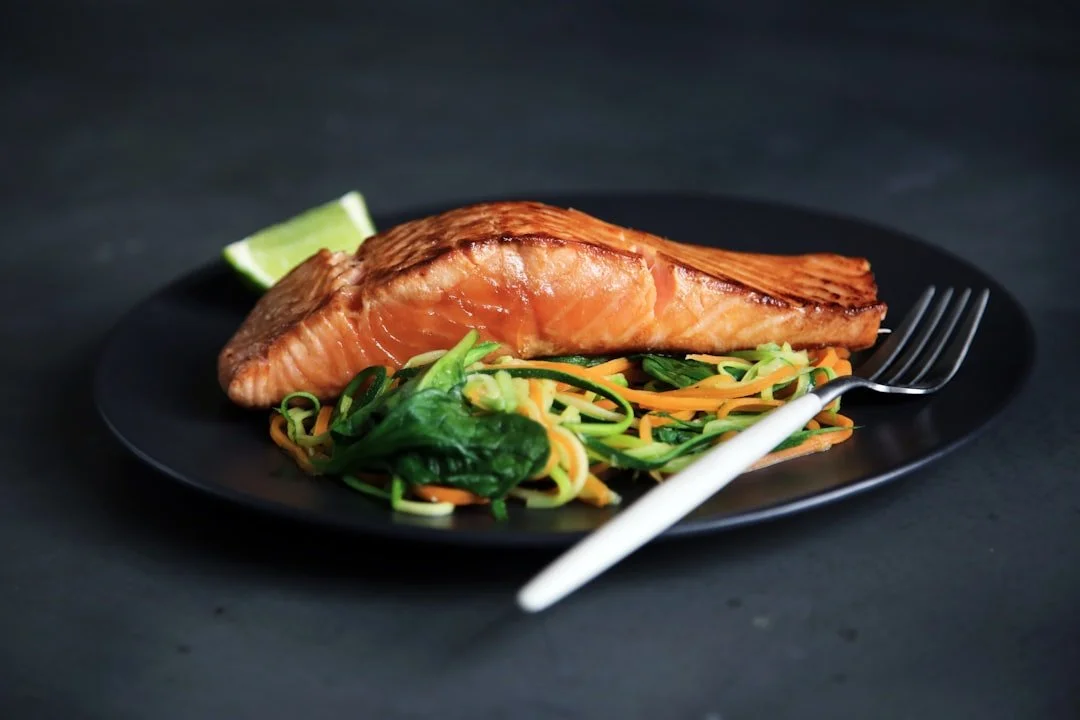
If you handed me a week of your meals and asked where to start, I wouldn't begin by taking anything away. I'd start with addition: three or four foods that go into the rotation this week, chosen because they're cheap enough to repeat, easy enough to cook tired, and dense enough in the compounds that calm an overactive inflammatory response. The subtraction comes later, and it comes easier once the plate is already fuller.
What follows is a curated list of the foods I'd reach for first with someone new to this work, ordered roughly by how much they give back relative to the effort they ask for. Underneath the list, I've spelled out what coaching around inflammation really looks like week to week, because that part is oddly missing from most of what's out there.
Chronic inflammation drives most symptoms that bring people to nutrition coaching
Chronic, low-grade inflammation is the body's alarm system stuck in the on position. It's the background hum behind a lot of what sends people to a coach in the first place: stiff mornings, joint ache that migrates, digestive unpredictability, a tiredness that sleep doesn't touch. Over years it's associated with cardiovascular disease, type 2 diabetes, arthritis, and autoimmune conditions, which is why the medical world takes it seriously and why the internet is stuffed with lists of miracle foods.
My filter is narrower than most. A food earns a spot here if it clears four bars:
- It has real mechanistic backing. Omega-3 fats, polyphenols, fiber that feeds gut bacteria. Not folklore.
- You can buy it at a normal grocery store. Frozen counts. Canned counts.
- It survives a bad week. If it only works when you have forty minutes and a clean kitchen, it doesn't belong on a beginner's list.
- It tastes like something. Nobody sustains a food they resent.
One more thing before the list. No single food fixes inflammation. Patterns do. The Mediterranean-style pattern has the most research behind it, and each item below is a doorway into that pattern rather than a standalone cure.
Cheap fatty fish deliver the same omega-3s as wild salmon
Sardines, mackerel, herring, and canned pink salmon carry the same long-chain omega-3s (EPA and DHA) that make wild salmon famous, at a fraction of the price. These fats get built into your cell membranes and shift the raw materials your body uses to make inflammatory signaling molecules. It's one of the few dietary changes with a direct biochemical path.
Open a tin of sardines packed in olive oil and you get that oily, briny smell that some people love and some people flinch from. If you flinch: mash them onto toasted sourdough with lemon zest, a lot of black pepper, and a scatter of parsley. The lemon cuts the oil. The parsley makes it taste like food instead of like a supplement.
A couple of servings a week is the range many nutrition professionals suggest. If seafood is off the table entirely, ground flaxseed and walnuts give you ALA, a shorter-chain omega-3 your body converts to EPA inefficiently. Not equivalent, but not nothing.
Extra virgin olive oil's peppery compound works best at two tablespoons daily
Good extra virgin olive oil contains oleocanthal, a polyphenol that produces a peppery catch at the back of the throat. That sting is the compound. Fresh, well-made oil bites a little when you taste it straight from the spoon, and a duller oil that's been sitting in a warm shop window for a year won't.
Most people under-use it. A couple of tablespoons a day, across dressings, roasted vegetables, and finishing drizzles, is the amount I typically suggest. Buy it in dark glass or tin, keep it away from the stove, and finish the bottle within a couple of months. The habit shift I'd push hardest: switch your default cooking fat, then add a raw finishing pour on top of whatever you just cooked. Heat degrades some of the polyphenols, so the raw drizzle is where the good stuff stays intact.
Dark leafy greens feed gut bacteria that lower inflammatory markers
Kale, chard, collards, spinach. High in vitamin K, folate, magnesium, and a range of carotenoids. Also high in the fiber that feeds the gut bacteria producing short-chain fatty acids, which is one of the quieter mechanisms behind why plant-heavy patterns lower inflammatory markers.
Here's the practical version. Buy greens the way you'd buy potatoes, by volume. A bunch of chard wilts down to almost nothing in a hot pan with olive oil and sliced garlic, maybe three minutes, and the stems, chopped small and given a two-minute head start, are the best part. Frozen chopped spinach belongs in your freezer permanently for the nights you're not cooking so much as assembling.
Rotating the type matters more than people assume. Different greens carry different phytonutrient profiles, and eating the same bagged spinach every day narrows what you're getting.
Frozen berries contain anthocyanins proven to reduce oxidative stress
The deep purple-red of blueberries, blackberries, and tart cherries comes from anthocyanins, polyphenols with a decent body of research behind their effect on oxidative stress and inflammatory markers. Tart cherry in particular has been studied around exercise-related soreness.
Frozen is fine. Often better, since fruit destined for freezing gets picked riper. A cup of frozen mixed berries stirred into plain yogurt loosens into something the color of a bruise, sweet and sour at once, and it takes eleven seconds to make. That's the whole point of putting it this high on the list: the effort cost is nearly zero, so it survives contact with a real week.
If you're managing blood sugar alongside inflammation, pair the fruit with protein or fat rather than eating it alone. That combination smooths the glucose curve, and glucose volatility is itself an inflammatory input.
Turmeric requires black pepper and fat to absorb properly
Curcumin, the active compound in turmeric, is poorly absorbed on its own. Black pepper contains piperine, which substantially raises that absorption, and fat helps too. So the traditional pairing (turmeric bloomed in oil with pepper, the way it's used across South Asian cooking) isn't a folk accident. It's the delivery system.
A quarter teaspoon stirred into a pot of lentils, warming in the oil until it smells faintly earthy and slightly bitter, does more than a sprinkle over a finished dish. Be clear-eyed with yourself about dosing though: the amounts used in clinical curcumin research are far above what you'd get from cooking. Culinary turmeric is a good habit, not a treatment. If you're considering a concentrated supplement, that's a conversation for someone who knows your medications, because curcumin interacts with blood thinners.
Legumes ferment into short-chain fatty acids that seal the gut lining
Lentils, chickpeas, black beans, split peas. Fiber, plant protein, magnesium, folate, and polyphenols in one very cheap package. The fiber is the headline here. It ferments in the colon into short-chain fatty acids like butyrate, which support the gut lining, and a leaky, irritated gut barrier is a plausible driver of systemic inflammation.
Start smaller than you want to if beans currently make you uncomfortable. Half a cup, a few times a week, building over a month. Gas is usually your microbiome adjusting rather than a sign the food is wrong for you, though genuine and persistent trouble is worth investigating properly.
A pot of red lentils with turmeric, olive oil, and a heap of wilted greens is four items from this list in one bowl, and it costs less than a coffee.
Fermented foods increase gut diversity beyond what fiber alone achieves
Plain yogurt with live cultures, kefir, real sauerkraut from the refrigerated section, kimchi, miso. The interesting research here suggests that increasing fermented food intake can lower inflammatory markers and increase gut microbial diversity, which is a mechanism distinct from fiber alone.
Check labels. Shelf-stable sauerkraut in a jar on a dry aisle has usually been pasteurized, which kills the cultures. You want the cold case, and you want to see cabbage and salt on the ingredient list, not vinegar. Good kraut smells sharp and sour and faintly sulfurous when you open it, and it should crunch.
A forkful with dinner is plenty. This is a food where a small daily amount beats a large weekly one.
Walnuts, ground flax, and green tea integrate effortlessly into existing routines
I'm grouping these because they occupy the same slot in a day: the small, repeatable additions that ask almost nothing of you. Walnuts bring ALA omega-3s. Ground flaxseed brings lignans and soluble fiber, and it must be ground, since whole seeds pass through undigested. Green tea carries EGCG, a well-studied polyphenol.
A tablespoon of ground flax into oatmeal or yogurt. A small handful of walnuts as the thing you eat at four in the afternoon instead of whatever's in the break room. Green tea brewed well below boiling, so it doesn't turn bitter and astringent.
None of these move the needle alone. Stacked daily for months, they change the overall pattern, and the pattern is what your inflammatory markers respond to.
Processed foods, refined carbs, and excess sugar drive inflammation up
The usual suspects: highly refined carbohydrates, industrially processed meats, added sugars in the volumes most people consume them, excessive alcohol, and heavily processed foods engineered for overconsumption. Those are real, and reducing them matters.
But I'd rather spend the first month on addition than restriction, for a reason that has more to do with psychology than biochemistry. Restriction requires vigilance, and vigilance is expensive when your life is already loud. Fill the plate with the foods above and the crowding-out effect does a lot of the removal work on its own.
Food is also not the only lever, which is where the plans found in online charts fall short. Sleep debt raises inflammatory markers. So does unrelenting stress, through a cortisol pathway that also changes how your body handles glucose and fat storage. I've written more about that loop in how chronic stress changes the way your body uses food, and there's a related piece on what evening meals do to your rest, since dinner timing and sleep quality feed each other in both directions.
Anti Inflammatory Nutrition Coaching Runs on Intake, Tracking, and Weekly Adjustment Cycles
This is the part almost no one publishes, so here's a plain description of the structure. Most holistic nutrition programs built around inflammation run on a similar shape:
- An intake session, which typically runs 60 to 90 minutes. Full picture: current eating patterns, symptoms and their timing, sleep, stress load, medications, medical history, what you've already tried and why it stopped.
- Follow-ups commonly run 30 to 45 minutes in my practice, weekly or biweekly at first, spacing out to monthly as things stabilize.
- Between-session work that's small and specific. Not a meal plan you'll abandon by Thursday. One or two behaviors, tracked loosely.
- Some form of symptom and food logging, because inflammation patterns often only become visible when you can see two weeks side by side.
- A defined program length, often designed to run three to six months, since dietary pattern changes need that long to show up in how you feel.
On pricing, coaches structure fees in a few standard ways: per-session rates, multi-session packages at a lower effective rate, or monthly retainers that bundle sessions with messaging access. Package pricing dominates in this niche because the work is longitudinal. Rates vary widely by credential, region, and format, so ask for the current fee schedule directly rather than trusting a number you read somewhere. I go through the mechanics of cost and what you should get for it in this breakdown of what a wellness coach does and doesn't do.
Registered Dietitians hold licensure; nutrition coaches do not
This distinction matters more in inflammation work than in general wellness coaching, because inflammation overlaps with diagnosable disease.
| Credential | Training path | Scope | Best fit for |
|---|---|---|---|
| Registered Dietitian (RD/RDN) | Accredited degree, supervised practice hours, national exam, state licensure in many states | Can provide medical nutrition therapy and work with diagnosed conditions | Diagnosed autoimmune disease, IBD, diabetes, kidney concerns |
| Certified Nutrition Specialist (CNS) | Graduate degree plus supervised hours and board exam | Advanced clinical nutrition, licensure varies by state | Complex cases, functional and integrative settings |
| Board-certified health coach (NBC-HWC) | Approved training program, practicum, national board exam | Behavior change, habit design, accountability; no diagnosing or treating | You know roughly what to eat and can't get yourself to do it consistently |
| Holistic nutrition consultant | Varies substantially by certifying body | Whole-food and lifestyle guidance within a wellness scope | General inflammation-reducing pattern change alongside sleep and stress work |
Ask any coach directly what they can and can't do, and treat a clean answer as a good sign. Someone who tells you a symptom belongs with your doctor is showing you where their boundaries are, which is exactly what you want. If you're currently under medical treatment for an inflammatory condition, a coach should be working alongside that care, not instead of it.
Virtual sessions predict better results through consistency and kitchen access
Virtual wins on consistency, which is the variable that predicts results. No commute, easier rescheduling, wider choice of practitioner, and you can hold your session from a kitchen where you can literally open the cupboard and show someone what's in it. That last part is underrated.
In person has its own advantages: hands-on cooking or grocery work, easier coordination with a clinic if your care is already local, and for some people a physical appointment simply carries more weight than a video call. If you've historically ghosted your own good intentions, that friction can work in your favor.
My plain-spoken lean is hybrid where it's available, and virtual by default otherwise. Nutrition work is a long game, and the format you'll still be showing up to in month four is the right one.
Start with two foods this week; add a third in two weeks
Pick two foods from the list above, not eight. The tin of sardines and the bag of frozen berries would be my opening pair for most people, because neither requires cooking skill and both fit into a week that's already full. Add a third in two weeks if the first two stuck.
What anti inflammatory nutrition coaching adds on top of a list like this is the part a list can't do: noticing which of your patterns is really driving the fire, and adjusting when week three goes sideways. If you're curious whether that kind of support fits what you're dealing with, look through the holistic nutrition writing here or come tell me what's been going on. Sometimes the first conversation is enough to see the shape of the thing.